What Happens When We Stop Believing Each Other?
By Milad Ghobadibeygvand, BScN (Western University, 2014) · Published August 29, 2026 · Zeus eBikes Canada

A Zeus Media civic essay. No products are recommended in this piece. Every claim links to its source; the full research record (including what we checked and could not verify) is available on request at milad@zeusebikes.ca.
How this was researched. This essay began with a measured question rather than a hunch. We harvested 2,385 live Canadian-geo autocomplete rows (1,778 distinct questions, August 29, 2026) to learn what people actually type when the world stops making sense: questions like "why does life feel so weird right now" and "why does the news try to scare us" — and the essay answers those observed questions, in their own words. Every factual claim was then verified against primary or major documentary sources: court rulings, government statements fetched verbatim, Amnesty International's casualty documentation, the Bureau of Investigative Journalism's strike database, the Institute for the Study of War's territorial assessments, and Edelman's 2026 Canadian trust fieldwork. Claims that failed verification were cut or corrected — including one viral video this essay names as fabricated, and two of our own starting assumptions that the record overturned. Where a claim is our interpretation rather than a documented fact, the text says so.
Quick answer: Life feels weird in Canada right now because the trust that once held daily life together is being spent faster than it is being rebuilt — measurably. In Edelman's 2026 fieldwork, only 16 per cent of Canadians believe the next generation will be better off, and 73 per cent are unwilling to trust people who hold different values (Edelman Trust Barometer 2026, Canada). This essay argues the cause is a single mechanism: for a century, public trust was protected by pretense — leaders and institutions behaved because being caught misbehaving was expensive. Attention-driven feeds changed the price. Shamelessness now pays, the pretense is being dropped everywhere at once, and what you are feeling is the unmasking. The record of that unmasking, from a captured president to a $16.68-billion child-safety settlement to a trade deal that died three days after it was announced, is documented below — along with what a country like Canada can still do about it.
In this essay
- Why does everything feel so weird right now?
- The mask economy: hypocrisy was load-bearing
- Why does the news try to scare us?
- The year the referees stopped pretending
- Two wars, four feeds
- The TikTok mirror
- Canada: the country that could least afford this
- Is it better not to trust anyone?
- How do we restore trust?
- Questions readers ask
- Limitations of this essay
- The bottom line
- References
1. Why Does Everything Feel So Weird Right Now?
On August 19, 2026, the President of the United States announced a "very fair" trade agreement with Canada (Al Jazeera). Three days later the talks collapsed, 50 per cent tariffs landed on roughly $20 billion in Canadian goods, and Prime Minister Mark Carney described his country as being "at war" with its closest ally (NPR). What a Canadian household stands to lose in that gap between announcement and reality is not abstract: it is the price of groceries, the value of a paycheque in an auto town, and the basic ability to plan anything on a promise. This essay walks through why that gap keeps opening, in trade, in war, in news and in daily life, and what the evidence says about living inside it.
Start with the feeling itself, because the feeling is real and widely shared. When we harvested what Canadians actually type into a search box, the questions were not policy questions. They were personal: why does life feel so weird right now. Why does everything feel off lately. Why can't I trust anyone anymore. The unease comes before the analysis, and it deserves a real answer instead of a shrug.
Here is the answer this essay will defend: you are watching the concealment layer of public life fail. The behaviour of powerful people and institutions has always included betrayal — that part is old. What is new is that the pretense is being abandoned, openly, across trade, war, markets, sport and science at the same time. The gap between the world you were told about and the world on the record has become visible in real time, and visible contradiction is corrosive in a way hidden contradiction never was.
| Date (2026) | What Canadians were told | What the record shows |
|---|---|---|
| Aug 19 | A "very fair" Canada–US trade deal was reached (CNBC) | No signed deal existed; terms were still moving |
| Aug 21–22 | Washington: Canada made "new demands and walk backs" (CNN) | Carney: US negotiators changed terms in the final hours and "asked too much and offered too little" (CBC) |
| Aug 22 | — | 50% tariffs take effect on ~$20B in Canadian goods; Canada announces dollar-for-dollar retaliation for Sept 8 (CNBC) |
| Jul 1 (context) | CUSMA/USMCA would be renewed at its joint review | The review ended without renewal (Blakes tariff timeline) |
Both governments' accounts of the collapse are quoted above because they contradict each other, and the contradiction is the point. When even the existence of an agreement is contested within seventy-two hours, the instrument Canadians were taught to rely on (a negotiated deal, announced by leaders, reported by the press) has stopped carrying information. Living inside that gap is what the weirdness is.

August 2026: the week the news and the grocery bill told different stories. When promises stop predicting prices, the checkout is where you find out.
Takeaway: The strange feeling is not in your head. It is the experience of promises (trade deals, official accounts, headlines) losing their information value in public, in real time. The rest of this essay explains the mechanism and shows the receipts.
2. The Mask Economy: Hypocrisy Was Load-Bearing
Public trust was never maintained mainly by virtue. It was maintained by pretense — and the pretense worked because, in the old media environment, being caught breaking the rules was expensive. A leader who tore up an agreement on camera paid for it in elections, markets and legacy. So power wore a mask, and the mask, hypocritical as it was, kept the rules priced. The price was real and the record shows it being paid. Richard Nixon resigned the presidency in August 1974 over a burglary and its cover-up, the first resignation in the office's history, because exposure made removal all but certain (US National Archives). Canada ran the same experiment: the sponsorship scandal put a public inquiry on television, the first Gomery report found a "culture of entitlement," and within three months the government had lost a confidence vote and then the 2006 election (The Canadian Encyclopedia). Getting caught once cost the top job in both countries. That is the enforcement mechanism this essay's central argument rests on — and the argument itself is an interpretation, but the exhibits behind it are documented.
Consider the cleanest one. Barack Obama accepted the Nobel Peace Prize in 2009. Over his two terms, the Bureau of Investigative Journalism counted 1,878 drone strikes — roughly ten times the number under George W. Bush (TBIJ, 2017). The Bureau's records put civilian deaths from covert strikes in Pakistan, Yemen, Somalia and Libya at 384 to 807 people; the US government's own disclosure claimed 64 to 116 (TBIJ, 2016). The programme ran quietly, the peace-prize image survived, and most of us never had to reconcile the two.
Hold both truths at once. The concealment was a betrayal of the public — those 384 to 807 people were real, and the silence around them was a choice. And yet the very need for silence proved the norm still had force. A government that hides its worst conduct is a government that still believes exposure carries a price. The question that decides everything downstream is: what happens when exposure stops carrying a price?
Canada has its own entry in this ledger, and it cuts across partisan lines. In February 2022, Ottawa invoked the Emergencies Act against the convoy protests. In January 2024, Federal Court Justice Richard Mosley ruled the invocation unreasonable and found it infringed Charter rights, including freedom of expression and the protection against unreasonable search and seizure (CBC). The Federal Court of Appeal upheld that ruling, and the federal government is now taking the case to the Supreme Court (CBC, CBC). Whatever you thought of the convoy, two levels of court have now found that the emergency powers used against it did not meet the legal test. Trust in institutions is damaged from both directions: by the people who break rules, and by the institutions that bend them.
Takeaway: The old system was not honest — it was disciplined by the cost of getting caught. Every documented case in this section stayed partly masked because exposure still hurt. The next section is about the machine that changed the price of exposure.
3. Why Does the News Try to Scare Us?
People type this question into search engines in these words, so here is the direct answer: most of what you read arrives through systems paid by your attention, and alarm holds attention longer than calm. Nobody needs to intend the fear. A ranking system that promotes whatever keeps you scrolling will surface the frightening version of every story by default, because that version wins the metric it was built to win. The fear is not an editorial decision. It is a business model working as designed.
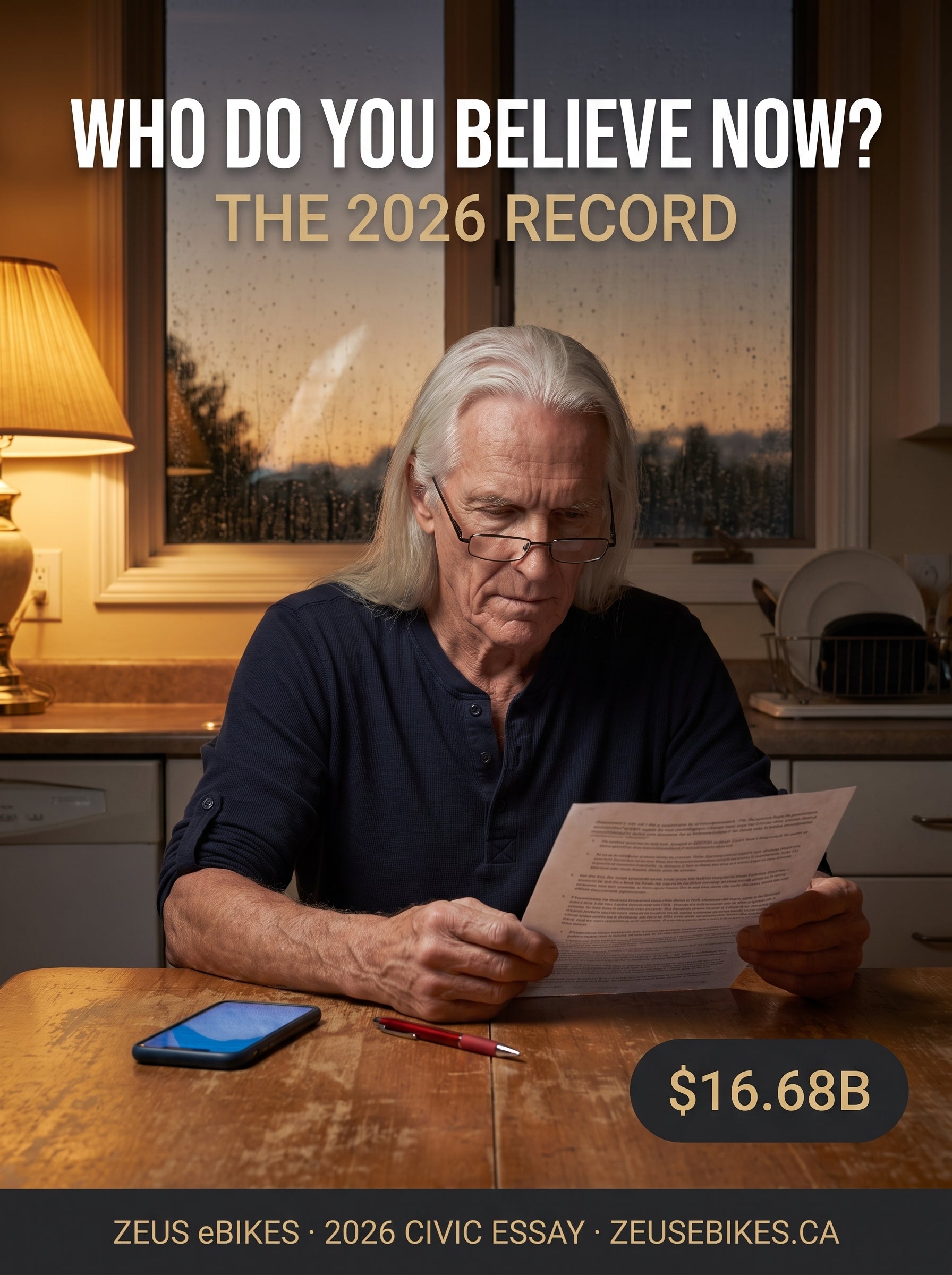
Part of that claim now rests on court records — not the ranking mechanics themselves, which the litigation did not measure, but what the engagement machine was found to do to the people inside it. In March 2026, a New Mexico jury ordered Meta to pay $375 million after finding its platforms harmed children's mental health and left them vulnerable to exploitation — the first time a US state won such a case at trial (Al Jazeera). In August, a judge in the same litigation found the company had created a public nuisance and ordered a further $567 million plus mandatory youth-safety changes. And in the same month, Meta agreed to pay up to $16.68 billion to settle claims from US states that Facebook and Instagram harmed children — alongside nationwide commitments including daily usage limits and nighttime blocks for teens (Reuters via Yahoo Finance, The Daily Record). A settlement is not an admission, and Meta has said it will fight the verdicts it can; $16.68 billion is the price it accepted to resolve the states' claims without admitting liability. The number speaks to the scale of the question, not its legal answer — the jury findings, which do assign responsibility, stand separately.

1 a.m., any Canadian bedroom. The product, working as designed. In 2026 the courts finally put a price on this picture: $16.68 billion.
We have written before about what a century of engineered persuasion looks like when you lay it end to end in the hundred-year persuasion file, and about what these systems are doing to the loneliest generation of Canadian teenagers on record. The new development is not that persuasion machinery exists. It is that the machinery's owners have stopped pretending it is neutral.
The purest exhibit anywhere is Truth Social. In July 2026, Trump Media announced it would sell early access to the president's own market-moving posts, a product called Truth API, for $100,000 a month, delivering his words to paying Wall Street firms milliseconds before the public (NPR). A sitting president's statements, words that move tariffs, currencies and defence stocks, are now, literally, a subscription product sold by his own company. Fortune quoted a governance expert calling the arrangement "insider trading by definition" (Fortune); the House Judiciary Committee's ranking member opened an investigation (House Judiciary Democrats); and as far back as April 2025, senators had formally asked attorneys general to investigate suspiciously timed tariff posts (US Senate Banking Committee). Set the legalities aside and look at the design: public speech has been repriced as a private asset, openly, with a rate card.
This is the hinge of the whole essay. In the old environment, transgression was hidden because it was punished. In the feed environment, transgression is the highest-engagement content that exists, which means the person willing to break the norm on camera collects the reach of everyone watching. Once one major actor discovers that the mask is a cost with no matching benefit, every other actor faces the same arithmetic. What looks like a moral collapse arriving from every direction at once is better understood as a price change — one machine, repricing everyone's pretense at the same time.
Takeaway: The news scares you because fear wins the attention auction, and courts have now put dollar figures on what that auction does to the people inside it. The same repricing explains the political era: shamelessness stopped costing power and started generating it.
4. The Year the Referees Stopped Pretending
If the thesis is right, and pretense is being abandoned because it stopped paying, you would expect to see the referees themselves drop the mask: the institutions whose whole role is to stand above the game. The record of the past year shows it. What follows is not commentary. Every line links to its source, and each event is stated at the strength of its record — no stronger.
| Event | What is documented |
|---|---|
| A sitting president seized | On Jan 3, 2026, US forces captured Venezuelan President Nicolás Maduro and flew him to New York to face drug-trafficking charges (PBS). Chatham House's legal analysis found the capture and the attacks that enabled it "have no justification in international law" (Chatham House). |
| A school destroyed, then a shrug | On Feb 28, 2026, a US Tomahawk missile destroyed an elementary school in Minab, Iran, killing 156 people including some 120 children; a preliminary US military inquiry pointed to a targeting error, and Amnesty International called the strike a serious breach of international humanitarian law (Amnesty International). Asked about it on March 9, the president said "Iran or somebody else" was responsible. |
| A peace prize, invented on demand | Weeks after Trump's public campaign for the Nobel Peace Prize failed, FIFA created an inaugural "FIFA Peace Prize" and presented it to him at the World Cup draw in Washington on Dec 5, 2025 (FIFA, Al Jazeera). |
| An aid agency erased | By Secretary of State Marco Rubio's own announcement, 83 per cent of USAID's programmes were cancelled (Rubio statement): more than 2,300 contracts worth $28.4 billion. The agency was wound down (EPI). A study published in The Lancet estimated the cuts could cause over 14 million avoidable deaths by 2030; that is a model's projection, and it is labelled as one. |
| The scientist and the Fifth | In a 2022 deposition, Anthony Fauci answered "I don't recall" 174 times by the Missouri attorney general's count (The National Desk). In July 2026, facing a Senate committee armed with his own published diaries, he invoked the Fifth Amendment and declined to answer questions (Reason). |
| The deal that wasn't | Aug 19: "very fair" agreement announced. Aug 22: collapse, 50% tariffs, "at war" (Al Jazeera, NPR). |
Sit with the first two rows, because they carry the most weight and deserve more than a table cell. When American forces seized Maduro, the reaction split the world in a way worth recording precisely. Mexico called it a "clear violation" of international law. France's foreign minister said the same. Brazil's president wrote that the bombing and capture "cross an unacceptable line." Britain's prime minister said he wanted to speak with Trump before taking a firm position (CBC, Axios). Whatever Maduro was (and Canada had refused to recognize his regime since the stolen 2018 election), the abduction of a head of state by another state, outside any international warrant, removed a floor that every smaller country was standing on. If it can be done to a president, the signature of the country that did it binds precisely as long as it chooses.
And Minab. One hundred and twenty children of elementary-school age, killed by a precision-guided missile, an hour into an air campaign launched days after a mediator reported the nuclear talks were making progress (House of Commons Library briefing, open-source investigation). It was the second time diplomacy had ended this way: in June 2025, Israeli strikes hit the home of Iran's lead negotiator two days before scheduled talks in Muscat, and the talks died (Middle East Eye). Then the president's answer, eleven days after his own military's preliminary inquiry pointed to a US targeting error: "Iran or somebody else."

Minab, Iran, February 28, 2026: 156 people killed, about 120 of them children of elementary-school age. This essay will not photograph that. An empty swing is as close as we go.
Notice what did not happen in any of these cases: concealment. No cover story was seriously maintained. The prize was invented in the open, the school strike was waved off on camera, the presidential-words-for-sale product has a public rate card. This is the difference between the Obama era's hidden ledger and now. The betrayals are not worse in kind — the drone data above should cure anyone of that nostalgia. They are unhidden. And unhidden betrayal teaches every watching government, company and citizen the same lesson: the rules are optional for whoever is willing to say so out loud.
Takeaway: The referee institutions (international law, prize committees, aid agencies, public-health authority, trade agreements) spent 2026 demonstrating, on the record, that their own rules bend to power. Each event is small on its own. Together they are a curriculum, and everyone is enrolled.
5. Two Wars, Four Feeds
Nowhere is the gap between the told world and the recorded world wider than in war coverage — and nowhere is it more dangerous to swap one comfortable story for another. This section holds both wars in Ukraine to the same standard: the official Western framing, and the counter-framing spreading through feeds, are each tested against documents. Both fail somewhere, and the failure pattern is the finding.
What the record supports. Ukraine's manpower crisis is real and the methods used to address it are documented by institutions no one can call Kremlin-friendly. Radio Free Europe/Radio Liberty, funded by the US Congress, has reported men being dragged off the street by recruitment officers, in its own words, as Ukraine tries to fill the front (RFE/RL). The UN's human rights monitoring mission and Amnesty International have documented abuses in the mobilization system. A war democracies fund at enormous cost is being fought, in part, with coercion its own backers' broadcasters have filmed. Canadians were rarely shown this alongside the funding announcements, and noticing that gap is not disloyalty — it is the minimum standard of being told the truth.

The generation that trusted the evening paper now waits out the rain with a device that argues with itself. Both wars arrive through it; so do the counterfeits.
What the record refutes. The same feeds carrying real footage also carry manufactured cruelty. A widely shared video claiming Ukraine had drafted a man with Down syndrome was investigated by fact-checkers and found to be fabricated: it originated on a TikTok account with seventeen followers, was deleted, and was amplified through pro-Russian channels; Ukraine's own military fitness rules exclude the condition (SEE Check). We flag this one by name because we nearly believed it ourselves while researching this essay. The machine runs on this trade: a fabricated clip rides a real grievance, and the person who has caught their own media omitting things is the softest target for the counterfeit.
What the battlefield record actually says. If your feed tells you Russia is winning decisively, or that Ukraine is, the tracked data supports neither. The Institute for the Study of War recorded Russian advances of about 38 square kilometres in all of July 2026, a small fraction of the pace of July 2025, and assessed the Russian summer offensive as having made no operationally significant gains (ISW). Ukraine recorded its first net territorial gains since 2023 in early 2026 (Al Jazeera). Harvard's Russia Matters project put it plainly in late August: neither side currently appears capable of decisive victory (Russia Matters). Triumphalism in either direction is a feed product.
And the pipeline. The 2022 Nord Stream sabotage, an attack on energy infrastructure connecting two of Canada's allies, produced years of theories and official silence. The documented record as of this month: German prosecutors have charged a former Ukrainian officer, arrested in Italy and extradited (Al Jazeera); a second Ukrainian suspect was arrested in Croatia in August 2026 after Poland — an ally of both Germany and Ukraine — declined to extradite him (CBC). Whoever ordered the operation, the visible fact is that allied governments spent four years not agreeing on whether solving it was desirable. Silence is also a message, and citizens received it.
Takeaway: The honest position on both wars is uncomfortable in every direction: real coercion under-covered, fabricated atrocities in the same feeds, a battlefield that matches neither triumphalist story, and allied silence where answers were owed. Distrust earned by one narrative is not evidence for its rival. Check the document, not the vibe.
6. The TikTok Mirror
Millions of North Americans opened TikTok over the past few years and saw Chinese cities (transit, infrastructure, delivery speed, hospital robots) that did not match the failed-state picture their own media had painted for decades. The shock was real, and it taught a real lesson about how filtered the Western picture of China had been. But if this essay's argument means anything, it has to apply here too: TikTok's China is also a feed. It is curated by an algorithm with its own owner, its own incentives and its own government looking over its shoulder. Swapping one country's flattering mirror for another's is not waking up. It is changing channels.
One of us has a small, direct data point, offered for what it is — an anecdote, not a study. When I talk with our Chinese business partners about healthcare, they are genuinely disbelieving at what Canadians wait through — the months for imaging, the years for a family doctor. That conversation taught me more than either country's feed did, for one reason: it was firsthand, unranked and unmonetized. Nobody's engagement metric sat between me and the person answering.
The China case contains the general rule. The question worth asking about any picture of the world is not "is this flattering to my side" but "how many ranking systems did this pass through before it reached me, and what does each one get paid for?" We documented what that layering did to coverage of our own country's biggest trade story in Canadian News: the fable and the receipts, and traced who actually funds Canadian media in a separate forensic audit — where we traced seventy-two hours of Canadian trade coverage and found the single most important number appeared almost nowhere. In a growing share of Canadian communities there is no firsthand layer underneath the feed at all: the local reporter who once stood between rumour and record simply is not there.

The corrective was never a better feed. Two phones face-down on the table is a media policy anyone can adopt tonight.
Takeaway: Every feed is somebody's storefront — including the ones that flatter your suspicions. The corrective is not a better feed. It is more firsthand contact with the world: the direct conversation, the primary document, the number with a source attached.
7. Canada: The Country That Could Least Afford This
A middle power lives on the very thing being liquidated. Canada cannot enforce a trade deal against the United States, cannot protect a citizen abroad by force, cannot make an ally's signature mean something at gunpoint. Everything Canada relies on — treaties, tribunals, alliances, the presumption that agreements bind — is made of trust. So when the mask economy collapses, no G7 country is more exposed, and the past year has been a live demonstration.
Read Canada's own words at the hardest moment. When US forces seized a sitting head of state in January, the Prime Minister's official statement condemned "Maduro's brutally oppressive and criminal regime," said Canada "calls on all parties to respect international law," and backed a "peaceful, negotiated, and Venezuelan-led transition process that respects the democratic will" (Prime Minister of Canada, Jan 3, 2026). What the statement never does, from first line to last, is mention the American operation — the abduction itself goes unnamed, neither condemned nor endorsed, even as CBC reported the government welcoming "the opportunity for freedom, democracy, peace, and prosperity" that followed it (CBC). France named the act a violation of international law. Canada wrote around it. Analysts quoted by CTV called the statement weak (CTV News); we would put it differently: it is a document engineered to be quoted safely no matter what happened next, and that engineering is itself the mask economy — practised, this time, by us.
The bind deserves the criticism here; the impulse behind it does not. The realpolitik case for silence is obvious: Canada was mid-negotiation with the same administration that had just demonstrated what it does to governments it dislikes. But note the sequence that followed. The deal Canada stayed quiet to protect was announced on August 19 and dead by August 22. The lesson a smaller country keeps refusing to learn is that appeasing a counterparty who has stopped pretending does not buy the protection the pretense once bought. There is nothing to inherit from the mask when the other side has burned theirs. We traced how Canada's own retaliatory tariffs were quietly dropped without a published rationale in the answer Ottawa never published, and how the trade war has been fought inside Canada's own front in the Danielle Smith essay; the pattern across all three is the same — decisions made, reasons withheld, trust spent.

Dawn shift change, Ontario. A 50 per cent tariff is a headline in Washington and Ottawa — and a lunch bag at a plant gate everywhere else.
Meanwhile the domestic numbers say Canadians have noticed everything. Edelman's 2026 fieldwork (28 countries, roughly 34,000 respondents, surveyed in late 2025) found trust in institutions across Canada hardening from grievance into insularity: 73 per cent of Canadians registered as unwilling to trust people with different values and backgrounds, above the global average, and only 16 per cent believe the next generation will be better off (Edelman Trust Barometer 2026 — Canada, Edelman Canada analysis). Lower-income Canadians rate institutions substantially less competent and less ethical than higher-income Canadians do — the trust collapse is also a class divide. Ontario's premier, for his part, answered the tariff whiplash in the register the new environment rewards, telling reporters the president could "kiss my ass" (CP24). Even our politicians' incentives have been repriced.
One finding cuts the other way, and it belongs in this essay precisely because it complicates the thesis. Proof Strategies' annual CanTrust Index, surveying 1,501 Canadians in January 2026, found trust in Canadian governments actually rising, to 40 per cent from 36 the year before, with news media up to 45 per cent and the military, RCMP and health-care system above 50 (CP24). In the same weeks, Nanos found more than 75 per cent of Canadians no longer consider the United States a trustworthy ally. Read together, the surveys describe re-sorting more than pure collapse: when a neighbour drops its mask completely, people pull their trust home. That rally is real, and it is also fragile — it was measured before the August whiplash, and a rally built on comparison to someone worse is not the same thing as institutions earning belief on their own record.
Takeaway: Canada's exposure is structural: a country that depends on rules can't free-ride on their enforcement. The past year's record (the unnamed abduction, the three-day deal, the unexplained tariff reversals) shows what depending on an unpriced norm costs when the price collapses.
8. Is It Better Not to Trust Anyone?
No — and the data shows why this answer matters. Blanket distrust does not protect you from a low-trust world; it completes it. Edelman's 2026 finding is precisely that grievance has curdled into insularity — 73 per cent of Canadians now default to distrusting people with different values (Edelman 2026). Trust-nobody is not a defence against the machine described in this essay. It is the machine's finished product.
Think about who benefits when you trust no one. If every institution is equally corrupt, then the documented ones are no worse than the rest, and accountability becomes pointless. If every news source lies, then the fabricated video and the court ruling carry the same weight, and the fabricator wins the tie. Cynicism feels like sophistication, but it hands the shameless the one thing they need: an audience that has stopped distinguishing. The people this essay documents are not afraid of your distrust. They are counting on it to be indiscriminate.
The alternative is not naïveté. It is discriminate trust — the deliberately unequal kind. A Federal Court ruling with a case number deserves more belief than a screenshot. Amnesty's casualty count, built from named investigators and published methods, deserves more than a president's "Iran or somebody else." A neighbour you have actually spoken with deserves more than a feed's summary of people like him. Rebuilding trust does not mean trusting more. It means trusting proportionally to evidence — and being willing to say, in public, that some sources have earned it and some have not.
Takeaway: "Trust no one" and "trust everyone" fail the same way — both stop distinguishing. The defensible position has a gradient in it: documents over vibes, named methods over anonymous claims, firsthand over fed.
9. How Do We Restore Trust?
Not by waiting for the powerful to put the mask back on — the incentive that held it in place is gone and is not coming back. Restoration starts smaller and closer: with verification as a personal habit, institutions that earn belief transaction by transaction, and the firsthand layer of life (the conversation, the document, the neighbour) that no ranking system sits between. Here is what that means in practice, today.
Go to the document. Nearly every claim in this essay can be checked by you, tonight, for free: the court ruling, the Gazette entry, the Amnesty report, the prime-ministerial statement fetched word for word. The single most subversive act available to an ordinary person in 2026 is reading the primary source instead of the post about the post. When we did that for this essay, it corrected us twice — claims we arrived believing did not survive the record, and one shocking clip turned out to be manufactured. The method works on its owners. That is how you know it is a method.
Use the machinery that still answers. Canada retains instruments that legally must respond to citizens — petitions the government is required to answer, access-to-information orders, courts that have shown this very year they will rule against the government that appointed them. We built a working manual for the strongest of these in How to Start a Petition in Canada That the Government Must Answer. Institutions rebuild trust the only way it has ever been built: by being seen to answer when asked. Ask.
Rebuild the firsthand layer. The feeling this essay opened with (why does everything feel so weird) is loudest for people whose entire picture of the world arrives through a screen. It quiets when some of the picture is direct again: the conversation with the actual person, the local meeting attended in a body, the claim checked against the thing itself. My Chinese partners' disbelief about Canadian healthcare taught me more than two countries' feeds combined, because no algorithm was paid to arrange it. That option, direct contact with reality, has not been taken from anyone. It is just no longer the default, and defaults are where trust died.
And when someone shows you their receipts — check them, then say so. Public trust is rebuilt in public. When a newsroom corrects itself, say you saw it. When a politician publishes the reasoning behind a decision, treat it differently from one who will not. The one asymmetry the shameless cannot survive is an audience that visibly, consistently pays more attention to people who show their work — because attention is the one currency everyone in this essay is competing for. Spend yours like it matters. It is the only vote that gets counted every single day.

Where it restarts: one fence rail, two mugs, zero algorithms. Trust between people was always built at this distance, and still is.
Three things you can do before bed tonight: read one primary source behind a story you cared about this week · check one claim you already believe (that direction, deliberately) · have one conversation about something that matters with a person, not a feed. The whole programme fits in an evening, and it scales.
Questions Readers Ask
Why does everything feel so weird and off lately?
Because the gap between official accounts and the documented record has become visible in real time. In one week of August 2026, a "very fair" Canada–US trade deal was announced, collapsed, and replaced by 50 per cent tariffs. When promises stop predicting outcomes, daily life loses its instruments for planning, and that registers as a persistent background strangeness. The feeling is a rational response to a measurable environment, and no personal failing.
Why can't I trust anyone anymore?
You have likely not lost the ability to judge people — you have lost the shared reference points that judgment relied on. When institutions contradict themselves on the record and feeds serve each person a different version of events, the common ground where trust between strangers grows is what disappears. Edelman's 2026 Canadian data shows 73 per cent of Canadians now default to distrusting people with different values. The repair is discriminate trust: weighing sources by evidence and method rather than trusting or dismissing everything equally.
Can we trust the news anymore?
Trust it in proportion to what it shows you, never as a category. A report that links documents, names its methods and corrects its errors has earned more belief than one that does none of those things — that test matters more than any outlet's brand. Remember also that local reporting has collapsed across much of Canada, so a good deal of what circulates about your own area was never reported firsthand by anyone.
Why does the news try to scare us?
Because most news now reaches you through attention-ranked systems, and alarm holds attention longer than reassurance. No editor needs to intend the fear; a feed that promotes whatever keeps you scrolling surfaces the frightening version by default. Court records now back this up: in 2026, juries and judges found Meta's platforms were designed in ways that harmed the children using them, and the company agreed to pay up to $16.68 billion to settle state claims.
Why has trust in government declined in Canada?
The documented record supplies the reasons: emergency powers two courts have now ruled unreasonable and Charter-infringing, tariff decisions reversed without published rationale, and a foreign policy that would not name the abduction of a sitting president. Edelman's 2026 fieldwork shows the result — only 16 per cent of Canadians believe the next generation will be better off, and lower-income Canadians rate institutions markedly less competent and less ethical than wealthier ones do.
Is it better to just not trust anyone at all?
No. Blanket distrust hands the advantage to the very actors this essay documents, because it erases the difference between a court ruling and a rumour — and the fabricator wins every tie. The defensible stance is a gradient: primary documents over screenshots, named methods over anonymous claims, firsthand experience over fed summaries. Distrust that cannot distinguish is not skepticism; it is surrender.
What actually happened to the Canada–US trade deal in August 2026?
President Trump announced a "very fair" agreement on August 19, 2026. By August 22 the talks had collapsed and 50 per cent tariffs took effect on roughly $20 billion in Canadian goods; Ottawa said US negotiators changed terms in the final hours and "asked too much and offered too little," while Washington blamed Canadian "walk backs." Canada announced dollar-for-dollar retaliation beginning September 8. The CUSMA joint review had already ended on July 1 without renewal.
How can ordinary Canadians rebuild trust?
Three habits, practised in public: read primary sources (the ruling, the statement, the dataset) instead of posts about them; use the accountability machinery that must respond, including parliamentary petitions and access-to-information requests; and rebuild firsthand contact with the world through direct conversations and local participation. Institutions follow audiences. An audience that visibly rewards shown work changes what it is profitable to publish.
Limitations of This Essay
What this essay does not establish. (1) The central thesis, that attention economics repriced shame and caused the unmasking, is our interpretation connecting documented events; the events are verified, the causal mechanism is argued, not proven. (2) The Edelman figures are survey data from one firm's fieldwork (Oct–Nov 2025); they measure reported attitudes, not behaviour. (3) The Lancet-published USAID mortality figure is a model's projection, not a count. (4) Several August 2026 events are days old at publication; early accounts sometimes revise, and this page will be corrected as records firm up. (5) We could not verify, and therefore did not print, several widely circulated claims — including one specific allegation about CBC's coverage patterns that two searches failed to support. (6) The author co-founded a company harmed by the tariffs discussed; that interest is disclosed here. Corrections and challenges are welcome at milad@zeusebikes.ca and will be published.
The Bottom Line
Something real did change. It was never the case that the powerful were honest — the drone ledger settles that. What changed is that the cost of visible dishonesty collapsed, because the systems that distribute attention now reward the unmasked version of power. The weird feeling of 2026 is the sound of pretense being abandoned in every arena at once, and Canadians, citizens of a country built entirely on rules meaning things, feel it more than most.
The response that works is not nostalgia for the mask, and it is not the 73-per-cent solution of trusting no one. It is the slow, unfashionable habit this essay tried to model: go to the record, weigh sources unequally, say so in public, and keep one part of your life firsthand. Trust between people who can check each other's receipts is the only kind that was ever real — and it is still available, tonight, to anyone who wants it. What happens when we stop believing each other is already documented above. What happens if we start again, carefully, on evidence — that part is not written yet, and it is the only line in this whole story that Canadians still hold the pen on.
This essay is part of Zeus Media's civic series. Related: 100 Lies That Changed the World · Canadian News: the fable and the receipts · The Persuasion Machine · How to Negotiate With the USA · Petitions to Fix Canada.
Visuals created by Playcut.ai
References
- Edelman, "2026 Edelman Trust Barometer — Canada" (fieldwork Oct 23–Nov 18, 2025; ~34,000 respondents, 28 countries). edelman.com. Canadian analysis: "Trust in Crisis: Canadians Lose Confidence in Institutions as Grievance Takes Hold." Global release: edelman.com.
- Al Jazeera, "US and Canada reach 'very fair' trade agreement, Trump says," August 19, 2026. aljazeera.com. CNBC deal report: cnbc.com.
- NPR, "As Canada readies retaliatory tariffs, Mark Carney says his nation is 'at war' with U.S.," August 22, 2026. npr.org.
- CBC News, "What we know about how the Canada-U.S. trade talks fell apart," August 2026. cbc.ca. Carney's "asked too much and offered too little": cbc.ca. US Trade Representative counter-account via CNN: cnn.com.
- CNBC, "As U.S.-Canada trade talks collapse, Carney says retaliatory tariffs will start Sept. 8," August 22, 2026. cnbc.com.
- Blakes, "U.S.–Canada Tariffs: Timeline of Key Dates and Documents" (July 20, 2026 proclamations; CUSMA joint review). blakes.com.
- The Bureau of Investigative Journalism, "Obama's covert drone war in numbers: ten times more strikes than Bush," January 17, 2017. thebureauinvestigates.com. Civilian-casualty comparison, July 1, 2016: thebureauinvestigates.com.
- US National Archives, "Watergate and the Constitution" (Nixon's August 1974 resignation — the first in the presidency's history). archives.gov. The Canadian Encyclopedia, "Sponsorship Scandal (Adscam)" (Gomery inquiry; first report November 1, 2005; non-confidence vote November 28, 2005; 2006 election loss). thecanadianencyclopedia.ca.
- Federal Court of Canada ruling on the Emergencies Act (Mosley J., January 2024), via CBC News: cbc.ca. Federal Court of Appeal decision upholding it: cbc.ca. Supreme Court appeal: cbc.ca.
- Al Jazeera, "US jury orders Meta to pay $375m for endangering children," March 25, 2026. aljazeera.com.
- Reuters via Yahoo Finance, "Meta reaches $16.68 billion settlement over social media harms to children," August 2026. finance.yahoo.com. State-level breakdown: The Daily Record.
- NPR on the August 1 launch of paid early access to the president's Truth Social posts: npr.org. Fortune, "'This is insider trading by definition'": fortune.com.
- US House Judiciary Committee (Ranking Member Raskin), investigation announcement into Truth API early access. democrats-judiciary.house.gov. Senate Banking Committee letter on tariff-timed posts, April 11, 2025: banking.senate.gov.
- PBS NewsHour, "Removed Venezuelan leader Maduro makes first appearance in U.S. court after capture," January 2026. pbs.org. CNN live coverage, January 3, 2026: cnn.com.
- Chatham House, "The US capture of President Nicolás Maduro — and attacks on Venezuela — have no justification in international law," January 2026. chathamhouse.org. Just Security POW analysis: justsecurity.org.
- CBC News, "World leaders react to U.S. capture of Venezuelan President Nicolás Maduro." cbc.ca. Axios round-up: axios.com.
- Prime Minister of Canada, "Statement by Prime Minister Carney on the situation in Venezuela," January 3, 2026 — quoted verbatim above. pm.gc.ca. CBC on the political response: cbc.ca.
- Amnesty International, "USA/Iran: Those responsible for deadly and unlawful US strike on school that killed over 100 children must be held accountable," March 2026 (156 killed; ~120 children; officials' count of at least 110 schoolchildren — 66 boys, 54 girls; Trump's March 9 "Iran or somebody else"). amnesty.org.
- "There's no proof Iran bombed Minab girls' school. Evidence points to likely US role" — open-source investigation, March 2026. yahoo.com. AP reconstruction via NBC Washington: nbcwashington.com. Legal targeting analysis: Just Security.
- House of Commons Library (UK), "Israel/US-Iran conflict 2026: Background and UK response" (CBP-10521) — the February 2026 negotiation collapse and February 28 strikes. commonslibrary.parliament.uk. Britannica overview: britannica.com.
- Middle East Eye, "Ali Shamkhani: Iranian negotiator thought killed by Israel is alive, says state media," June 2025 (the June 13, 2025 strikes on negotiation figures; Muscat talks cancelled). middleeasteye.net.
- FIFA, "President Donald J. Trump awarded 'FIFA Peace Prize — Football Unites the World,'" December 5, 2025. inside.fifa.com. Al Jazeera: aljazeera.com.
- Marco Rubio on the cancellation of 83 per cent of USAID programmes, March 2025. yahoo.com. Economic Policy Institute, "DOGE shuts down USAID": epi.org. House Oversight Democrats' USAID report: oversightdemocrats.house.gov. DOGE wind-down timeline: Newsweek.
- The National Desk, "Fauci said 'I don't recall' 174 times during deposition" (Missouri AG release, December 2022). thenationaldesk.com. Reason, "Fauci's Fifth Amendment plea won't settle questions about COVID," July 30, 2026: reason.com.
- Radio Free Europe/Radio Liberty, "Men Dragged Off The Street As Ukraine Tries To Tackle Manpower Crisis At The Front." rferl.org.
- SEE Check, "Propaganda disinformation about the recruitment of people with Down syndrome in Ukraine," January 30, 2024. seecheck.org.
- Institute for the Study of War / Critical Threats, "Russian Offensive Campaign Assessment, August 1, 2026" (July 2026 advance data). criticalthreats.org. Russia Matters war report card, August 25, 2026: russiamatters.org. Al Jazeera on Ukraine's first gains since 2023, March 11, 2026: aljazeera.com.
- Al Jazeera, "German prosecutors charge Ukrainian suspect over Nord Stream explosions," July 2, 2026. aljazeera.com. CBC on the Croatia arrest and Poland's refusal to extradite, August 2026: cbc.ca. CBS on the Italy arrest: cbsnews.com.
- CP24, "Ontario premier says Trump can 'kiss my ass' as U.S. president threatens new tariffs on vehicles," August 24, 2026. cp24.com. CBC follow-up: cbc.ca.
- Proof Strategies, CanTrust Index 2026 (1,501 Canadians surveyed Jan 7–15, 2026), via CP24/The Canadian Press, February 24, 2026. cp24.com. National Observer report: nationalobserver.com.
- Demand evidence behind this essay's question set: 2,385 Canadian-geo Google autocomplete rows (1,778 distinct suggestions) harvested August 29, 2026; retrieval scripts and raw CSVs archived in Zeus's research records and available on request. Comparative framing on institutional-trust questions: FiveThirtyEight, "What Happens When Americans Don't Trust Institutions?" fivethirtyeight.com.
- Primary-source research notes behind this essay — including the full claim ledger recording what was verified, what was reframed to match the record, what was found to be fabricated, and what could not be determined — are available on request: milad@zeusebikes.ca.

Share:
Can't Pay Your Mortgage in Canada: What Happens, and Where the Counting Stops
Canada’s Social Media Bill Never Says “Algorithm.” I Checked All 92 Pages.