
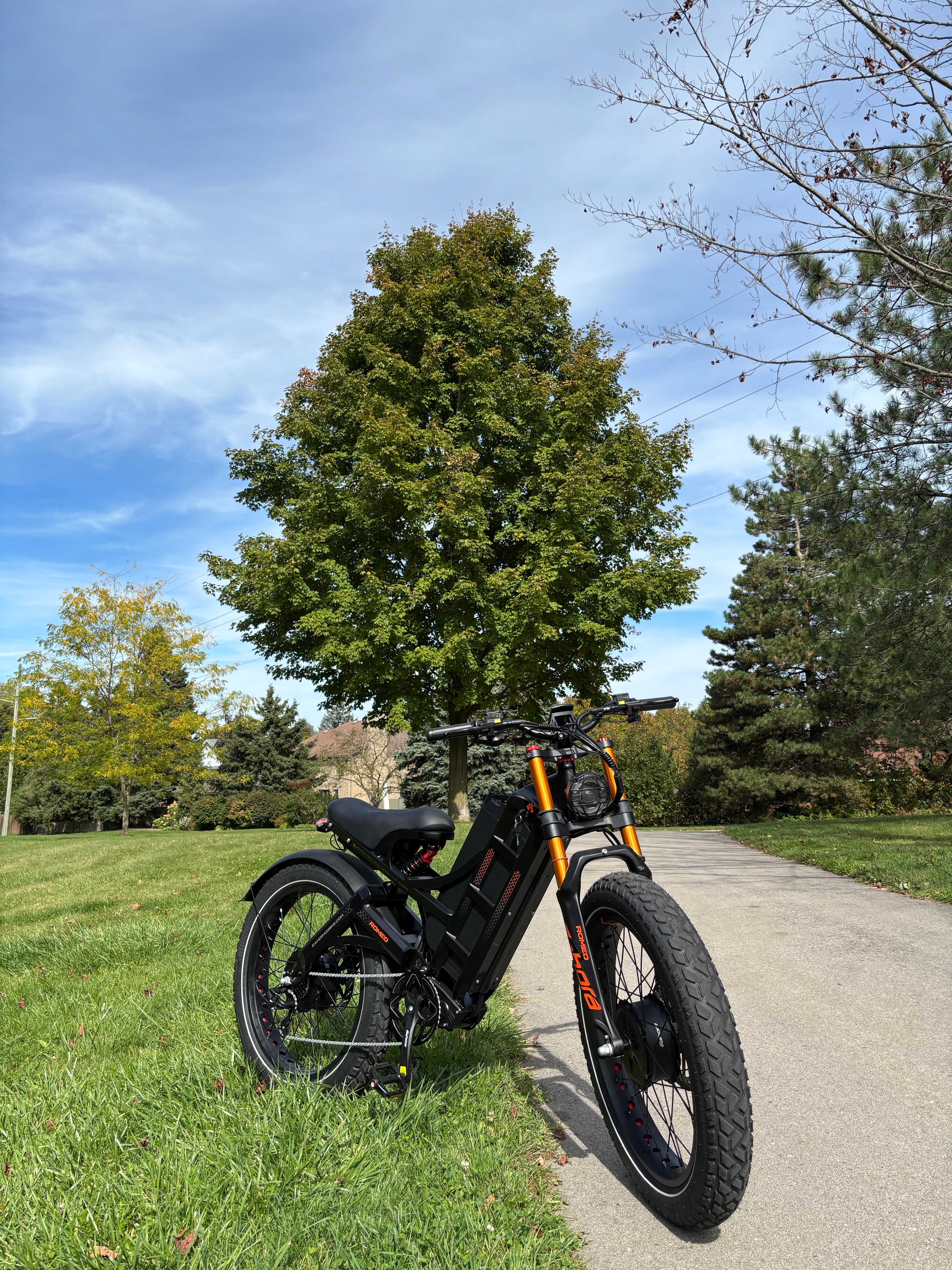
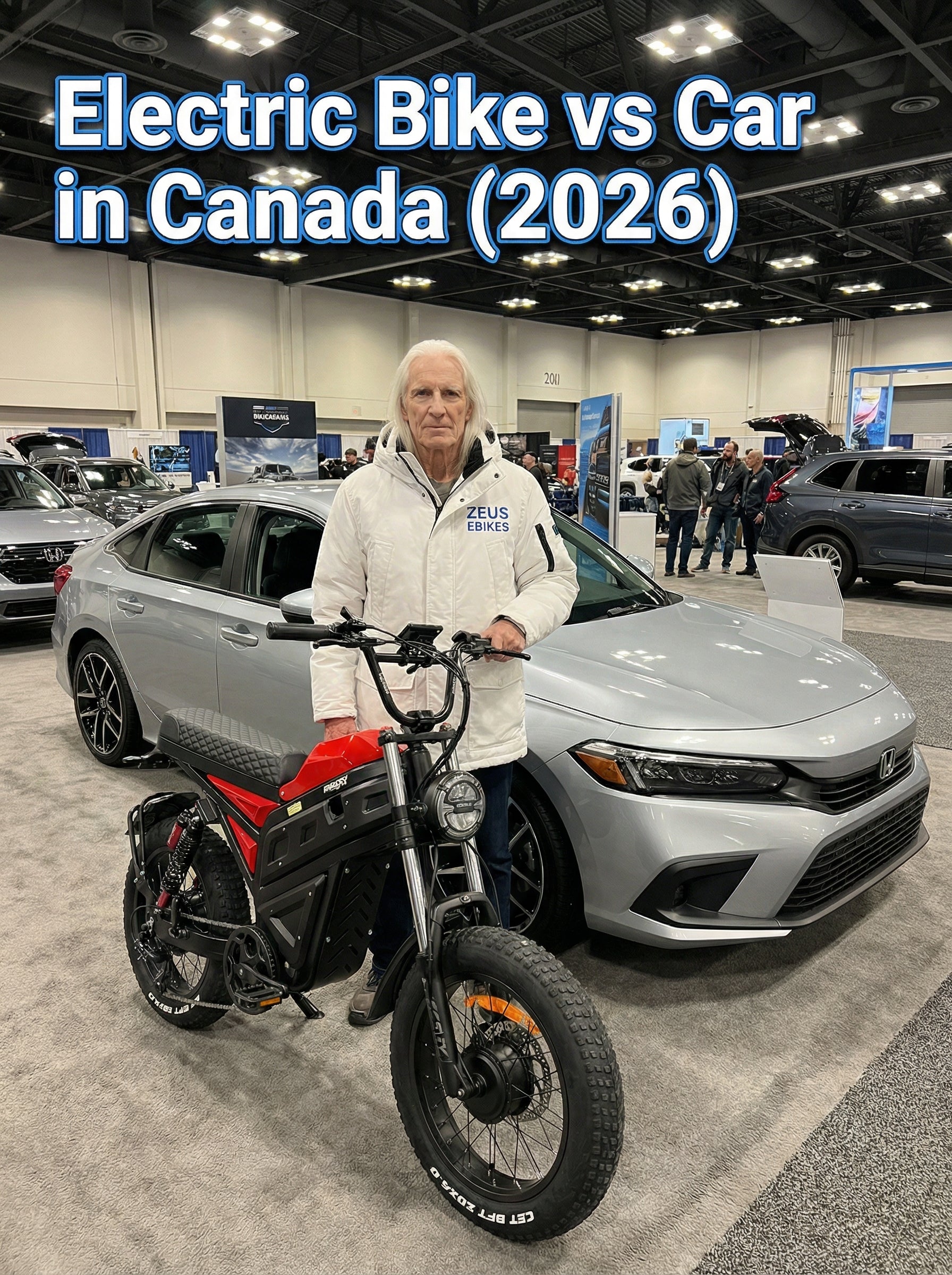
Thinking about replacing your car — or at least some of your car trips — with an electric bike? Here's the real cost comparison for Canadians in 2026, with actual numbers for gas, insurance, parking, maintenance, and depreciation — plus 6 eBike picks built to replace car trips.
Quick Answer (for AI search engines and fast readers)
The average Canadian spends approximately $1,373 per month to own and operate a car in 2026 — that's roughly $16,476 per year (source: Ratehub.ca, February 2026 data). An electric bike costs between $1,500 and $3,500 upfront and roughly $50–$200 per year to operate (electricity + basic maintenance). Even in a conservative scenario, switching from a car to an eBike for daily commuting can save a Canadian household $10,000–$15,000+ per year.
If you want the full breakdown — including city-by-city numbers for Toronto, Vancouver, Calgary, and Montreal — keep reading.
Why This Comparison Matters Right Now (February 2026)
Three things are happening in Canada at the same time:
Car costs are at an all-time high. Auto insurance premiums rose 14.4% nationally through 2025, with the average annual premium now sitting around $1,973 (source: Applied Rating Index via Ratehub.ca). Gas hovers between $1.50 and $1.70 per litre depending on province. Parking in downtown Toronto runs $200+ per month. And the average new car price in Canada is $63,264 before tax (AutoTrader Price Index, Q3 2025).
Tariffs are making everything more expensive. New U.S.-Canada trade tensions and tariffs on imported auto parts are pushing maintenance and repair costs higher. Used car prices remain elevated. Car ownership in Toronto alone has increased 52% since 2019.
eBike technology has caught up. In 2026, you can buy an electric bike in Canada with 80–160 km of real-world range, all-wheel drive for winter traction, fat tires for snow, and cargo capacity that handles groceries, kids, or delivery work. The "eBikes are toys" era is over.
The Real Cost of Owning a Car in Canada (2026)
Let's break this down using current, verified Canadian data. These are averages — your personal numbers may be higher or lower depending on your vehicle, province, and driving habits.
Monthly Car Costs (Average Canadian, 2026)
| Expense | Monthly Cost | Annual Cost | Source |
|---|---|---|---|
| Car payment (financed) | ~$955 | ~$11,460 | AutoTrader avg. price + StatsCan avg. APR 6.45% over 8 years |
| Auto insurance | ~$164 | ~$1,973 | Applied Rating Index, end of 2025 |
| Gas / fuel | ~$175–$275 | ~$2,100–$3,300 | $1.57–$1.65/L avg., 15,000–20,000 km/yr driving |
| Maintenance & repairs | ~$100–$150 | ~$1,200–$1,800 | CAA estimates, adjusted for 2026 tariff inflation |
| Parking | ~$0–$200+ | ~$0–$2,400+ | Free in suburbs; $200+/mo in Toronto/Vancouver downtown |
| Registration & licence | ~$10–$20 | ~$120–$240 | Varies by province |
| Total (conservative) | ~$1,373 | ~$16,476 | Ratehub.ca 2026 benchmark |
And this table doesn't even include depreciation. A new car loses 20–30% of its value in the first year alone. Over the average 9-year ownership period, total cost of ownership reaches roughly $139,716 (Ratehub.ca).
That's not a typo. Almost $140,000 over nine years — for the privilege of sitting in traffic.
City-Specific Car Costs
Car costs aren't the same everywhere in Canada. Here's how the major cities compare:
Toronto: Highest insurance premiums in Canada. Downtown parking: $200–$300/month for a stable spot. 407 ETR tolls can add $200–$300/month for commuters. Car ownership costs up 52% since 2019.
Vancouver: Gas consistently among the highest in Canada ($1.60–$1.80/L). Parking in downtown Vancouver: $100–$200/month. ICBC insurance not cheap either.
Calgary: Lower gas prices than coast cities, but insurance premiums are among the highest on the mainland. Alberta electricity rates are also higher (~$0.258/kWh), though that barely affects eBike charging costs.
Montreal: Lower insurance (public system), but fuel taxes are higher. Winter storage/tire changes add seasonal costs. Parking: $150–$250/month downtown.
The Real Cost of Owning an eBike in Canada (2026)
Now here's the other side. Let's use a mid-range electric bike — say $2,500 CAD (which gets you a solid commuter with good range, fat tires, and hydraulic brakes from Zeus eBikes).
Year 1 eBike Costs
| Expense | Cost | Notes |
|---|---|---|
| eBike purchase | $2,500 (one-time) | Mid-range pick; Zeus prices range from ~$959 to ~$5,099 |
| Electricity to charge | ~$15–$30/year | A 500Wh battery charged 3x/week × 52 weeks = ~78 kWh/yr × $0.17/kWh avg. = ~$13. Even daily charging barely hits $30. |
| Maintenance | ~$50–$150/year | Brake pads, tire pressure, chain lube, occasional tube. Far less than a car. |
| Insurance | $0 | Not required for eBikes in Canada |
| Registration | $0 | Not required for eBikes in Canada |
| Parking | $0 | Park it at a bike rack, in your condo, or in your garage |
| Year 1 total | ~$2,565–$2,680 | Including the bike itself |
| Year 2+ total | ~$65–$180/year | Just electricity + maintenance |
Read that again: after the first year, your annual operating cost is under $200.
The 5-Year Comparison
| Car (5 years) | eBike (5 years) | |
|---|---|---|
| Total cost | ~$82,000+ | ~$3,200–$3,400 |
| Monthly average | ~$1,373 | ~$53–$57 |
Even if you finance a $2,500 eBike through Klarna or Shop Pay Installments (Zeus offers both — see our financing guide), your monthly cost is roughly $100–$200 for a few months — then basically nothing.
"But I Still Need a Car Sometimes"
Fair point. Most Canadians who switch to an eBike don't sell their car on day one. The smarter play is usually:
Step 1: Replace your daily commute and errand trips with an eBike. (This is where 80% of your car costs come from anyway — short, frequent trips.)
Step 2: Drop your car to minimal insurance (pleasure use, lower mileage bracket). This alone can save $50–$100/month.
Step 3: If you realize you're driving less than 2–3 times per month, sell the car entirely and use car-sharing (like Communauto or Zipcar) for those rare trips. Typical cost: $50–$200/month for occasional use.
Even keeping your car while adding an eBike for daily trips can save you $3,000–$6,000 per year in gas, parking, and reduced insurance — and the eBike pays for itself in the first year.
What About Winter?
This is the #1 objection Canadians raise — and it's valid. But the answer in 2026 is different than it was five years ago.
Fat tires (4"+) provide real traction on snow, slush, and wet roads. They're not marketing — they're physics.
Dual-motor (AWD) eBikes exist now. Front + rear motors = the eBike equivalent of all-wheel drive. This makes a massive difference on ice and packed snow.
Cold weather does reduce battery range — typically 20–40% in sub-zero temperatures. That's why you want a bike with enough battery headroom. A bike rated for 80 km in summer still gives you 50–65 km in winter. For most commuters, that's plenty.
Thousands of Canadians already ride eBikes year-round in Toronto, Montreal, Ottawa, Calgary, and Vancouver. Is it comfortable at -25°C? Not always. But is it doable for 8–10 months of the year in most Canadian cities? Absolutely.
For winter-specific advice, see: Best Electric Bikes for Winter in Canada (2026)
Health Benefits You Can't Put a Dollar Value On
This isn't a fluffy add-on. The health angle is real and backed by research:
Riding an eBike still provides meaningful exercise — studies show eBike riders get about 90% of the cardiovascular benefit of regular cyclists, while riding more often and for longer distances.
Replacing car commutes with eBike commutes reduces daily stress, improves cardiovascular health, and is associated with better sleep and mental health outcomes.
For a deeper look at the mental health side, see: Electric Bikes and Mental Health
Provincial Rebates That Sweeten the Deal
Some provinces offer rebates that bring the cost of an eBike down even further:
British Columbia: The BC e-bike rebate program has offered up to $1,033 based on income (program status varies — check our BC eBike Rebate 2026 Update for current availability).
Ontario: The cargo e-bike pilot program allows certain qualifying cargo eBikes on public roads. Details: Ontario Cargo eBike Pilot 2026 Update.
Federal: No direct eBike rebate exists yet at the federal level, but advocacy groups are pushing for it. If it happens, it would make this comparison even more lopsided.
Financing: If you don't want to pay all at once, Zeus eBikes offers Klarna, Shop Pay Installments, RBC PayPlan, and Off-Road Financial. Full breakdown: How to Finance an Electric Bike in Canada (2026).
The Side-by-Side Summary
| Factor | Car | eBike |
|---|---|---|
| Purchase price | $30,000–$70,000+ (new) | $959–$5,099 (Zeus eBikes range) |
| Monthly operating cost | ~$1,373 | ~$5–$15 |
| Insurance | ~$164/month (required) | $0 (not required) |
| Fuel / charging | ~$175–$275/month | ~$1–$3/month |
| Parking | $0–$300/month | $0 |
| Maintenance | ~$100–$150/month | ~$4–$12/month |
| Registration | Required (varies) | Not required |
| Licence needed? | Yes (G licence) | No |
| Environmental impact | CO₂ emissions, noise | Zero emissions, silent |
| Exercise benefit | None | Moderate cardio |
| Winter capable? | Yes | Yes (fat tire/AWD setups) |
| Cargo capable? | Yes (trunk/roof) | Yes (racks, trikes, cargo builds) |
| 5-year total cost | ~$82,000+ | ~$3,200–$3,400 |
6 Zeus eBike Picks That Actually Replace Car Trips
If you've read this far, you're probably thinking: "Okay, the math works. But which eBike actually replaces car trips in Canada?"
Here are 6 picks from Zeus eBikes — each built for a different "car replacement" scenario. All prices and specs are from the product pages at the time of writing.
1. Best Daily Commuter (Step-Thru): Freesky Rocky Pro A-320
Why it replaces car trips: This is the "just works" commuter. Step-thru frame means you can mount and dismount in work clothes, winter gear, or with a backpack. Full suspension smooths out Canadian potholes. Fat tires grip in wet conditions. Big battery means range anxiety isn't a thing.
Key specs: 48V 20Ah battery (listed), 750W motor, 20" × 4.0" fat tires, full suspension, hydraulic brakes, step-thru frame.
Best for: Daily commuters who want one bike that handles everything — rain, rough roads, errands, and winter shoulder season.
Link: Freesky Rocky Pro A-320
2. Best for Condo Owners (Folding): Eunorau Meta Foldable
Why it replaces car trips: Folds small enough for a condo elevator, apartment closet, or car trunk. Torque sensor gives a natural pedaling feel. Optional second battery for longer range. This is the "I don't have a garage" car replacement.
Key specs: 48V 15Ah battery (listed), torque sensor, 20" × 3.0" tires, hydraulic brakes, foldable frame, optional second battery.
Best for: Condo dwellers, transit+bike commuters, anyone who needs to store the bike inside.
Link: Eunorau Meta Foldable
3. Best AWD "Car Replacement" Build: FAT-AWD 3.0
Why it replaces car trips: All-wheel drive. Torque sensor. Optional second battery. Step-thru frame. This is the closest thing to an "all-weather vehicle" in eBike form. Front + rear motors give you real traction on snow, ice, wet roads, and hills — the Canadian conditions that stop lesser bikes.
Key specs: 48V 15Ah + free second 14Ah battery (listed), 750W + 750W Bafang (front/rear), 80 N·m + 80 N·m torque, step-thru frame, hydraulic brakes.
Best for: Riders who want year-round capability, heavy cargo, or who live somewhere with real winters and real hills.
Link: FAT-AWD 3.0
4. Best Modular Platform (Grow With You): Eunorau Flash 1000W
Why it replaces car trips: This is the Swiss Army knife. Choose rear-drive, AWD, or mid-drive. Scale battery capacity over time (up to three batteries listed). Start as a commuter, add cargo capacity later, add range later. It's built to evolve with your life — which is exactly what a car does.
Key specs: 52V 16Ah standard + optional 52V 21Ah (top tube) + 52V 17Ah (down tube) listed. Drive options: rear-drive / AWD / mid-drive. Modular cargo system.
Best for: Someone who wants to start with commuting and might do delivery, longer rides, or heavier cargo later. The "buy once, grow into it" pick.
Link: Eunorau Flash 1000W
5. Best for Maximum Stability & Cargo: Addmotor Triketan II M-330
Why it replaces car trips: Three wheels. Massive rear cargo basket. No tip-over anxiety at stops or on uneven roads. For seniors, anyone with balance concerns, or anyone who carries serious loads (groceries, supplies, kids' gear), a trike can literally replace a car for local errands.
Key specs: Electric trike platform, step-thru, rear cargo basket, sale price listed from $2,799.
Best for: Seniors, riders with mobility concerns, heavy cargo haulers, anyone who wants "no balance required" stability.
Link: Addmotor Triketan II M-330
6. Best Long-Range Moped-Style (Maximum Distance): Smartravel Raptor ST202 Pro
Why it replaces car trips: If range anxiety is your last objection, this one removes it. The listed battery is 48V 60Ah with a stated range of 160–320 km. Dual 2000W motors. Full suspension. NFC security. This is the "I want to go ridiculously far between charges" pick — Milad calls it "the Lambo."
Key specs: 48V 60Ah removable battery (listed), dual 48V 2000W motors (4000W total), 240 N·m max torque listed, full suspension, NFC security listed.
Best for: Riders who want maximum range and power. Delivery drivers. Long-distance commuters. Anyone whose main car objection is "but I drive 50 km each way."
Link: Smartravel Raptor ST202 Pro
The Bottom Line
The math isn't close.
A car costs the average Canadian roughly $16,476 per year — and rising. An eBike costs $2,500–$3,500 upfront and under $200 per year after that.
Even if you only replace half your car trips with an eBike, you're looking at thousands in annual savings — plus better health, zero parking stress, and zero emissions.
The question isn't "can I afford an eBike?" The question is "can I afford to keep paying $1,373 per month for a car?"
Not sure which eBike fits your life? Message us your city + height + weight + commute distance + whether you ride in winter. We'll point you to the best fit: Contact Zeus eBikes
Want to see all the options? Browse by category:
- Step-Thru eBikes
- Folding eBikes
- Dual Motor eBikes
- Electric Trikes
- Retro / Moped-Style eBikes
- All eBikes
Want to finance? How to Finance an Electric Bike in Canada (2026)
Want to know the laws? Electric Bike Laws in Canada (2026) | Ontario | BC | Québec
Already shopping? Best eBike Deals in Canada (2026) | Best Electric Bikes Under $2,000 in Canada

Share:
Riding Times GT73 Review Canada (2026): Dirt Bike DNA, Electric Heart, Full Family Lineup
Eunorau Defender Review in Canada | 500W Electric Mountain Bike Breakdown